U.S. Special Forces Soldier’s Arrest Sparks Debate on Insider Trading in Prediction Markets
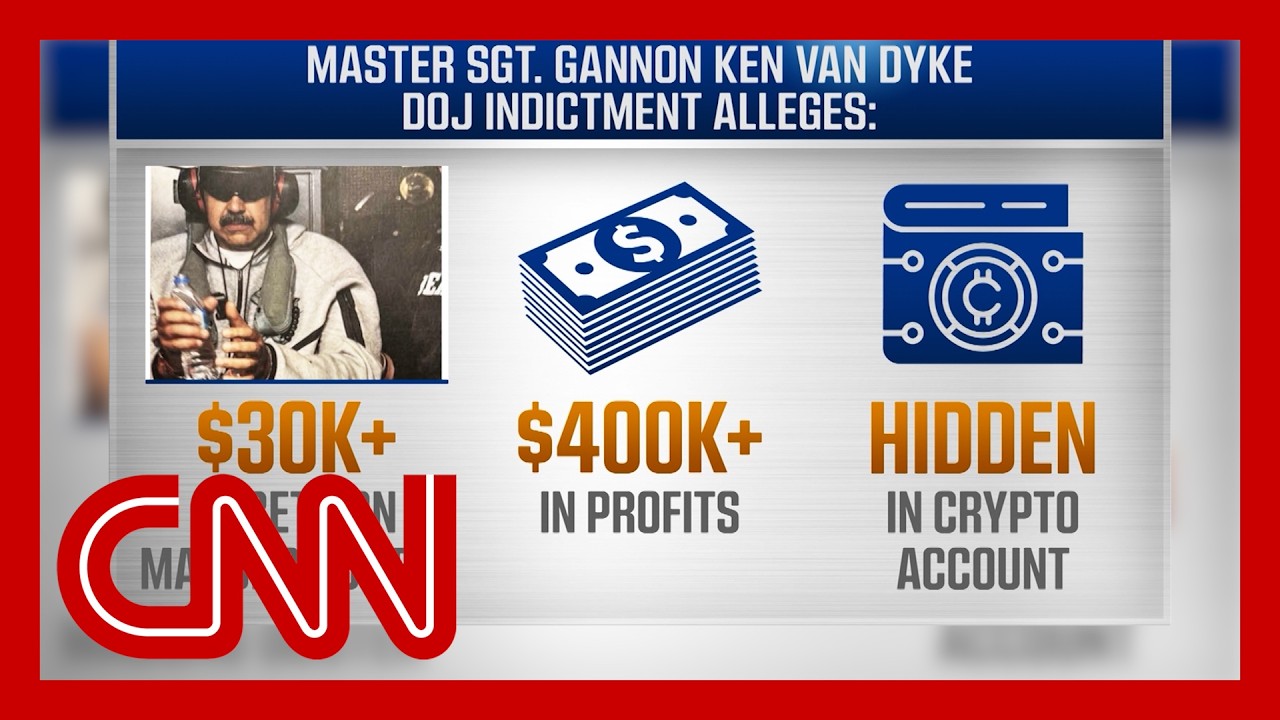
In a case that raises significant ethical and legal questions, Gannon Kin Van Dike, a U.S. Special Forces master sergeant, has been arrested on five criminal charges related to his alleged involvement in the capture of Venezuelan President Nicolás Maduro. Prosecutors have accused him of gambling on the operation, netting a staggering $400,000 in profits from online prediction markets. The accusations have ignited a broader conversation about the integrity and regulation of prediction markets, particularly when government employees are involved.
According to the indictment, Van Dike opened an account on Poly Market, an online prediction marketplace, where he placed bets on whether Maduro would be out of power by January. His initial wager was $32,000 on this longshot proposition made in late December, and he reportedly made 13 additional bets in the days leading up to the operation. The allegations suggest a disturbing intersection between insider knowledge and financial gain, blurring the lines between informed speculation and unethical conduct.
This incident has not escaped the attention of political figures, including former President Donald Trump, who commented on the matter, seemingly perplexed by the implications of a federal employee betting on such high-stakes scenarios. His analogy to Pete Rose, the former Major League Baseball player banned for betting on his own team, underscores the gravity of Van Dike’s choices. Trump’s remarks highlighted a concern that could resonate in national discourse; when military personnel leverage privileged information for financial gain, the potential for corruption is looming.
Margaret Donovan, a former Army captain and federal prosecutor, weighed in on the implications of this case. She characterized Van Dike’s conduct as extremely troubling, especially during a time when military credibility is under scrutiny. “I think it’s important for the Department of Justice to bring cases like this to show that we are willing to respond to corruption,” she stated. Donovan pointed out that reliable evidence likely stems from poly market records and the soldier’s online activity, which could serve as the backbone of the prosecution’s case.
However, Adam Kinzinger, a former Republican congressman and retired Air Force lieutenant colonel, also noted the human element of the story. He explained that the allure of financial gain can be tempting, even for highly trained military operatives. “People are tempted; they’re humans,” he said. Despite acknowledging the pressures that may lead someone to cross ethical boundaries, Kinzinger affirmed the importance of accountability.
The potential ramifications of this case extend beyond an individual soldier. The prosecutors must prove that Van Dike acted on material non-public information, a requirement typically associated with insider trading cases. Legal experts suggest that while the context may appear modern—taking place on an online platform—the fundamental violations remain rooted in traditional laws. Given that this is the first case centering around prediction markets, it opens up a new legal frontier and raises questions about how similar cases might be handled in the future.
The controversy around prediction markets has led many to consider whether strict regulations should be established to minimize conflicts of interest. Some advocates argue that all government employees, military and civilian alike, should be banned from participating in these markets altogether. The rationale is simple: those close to decision-making processes could unduly benefit from their positions.
However, critics of blanket bans caution that simply enforcing regulations could create unintended consequences. With individuals often finding loopholes or ways to profit indirectly, policing insider trading becomes increasingly complex. Kinzinger proposed a thoughtful approach to regulation, emphasizing the need for transparency and safeguards within prediction markets without compromising individual autonomy.
As this case unfolds, it is clear that the implications will reverberate through various sectors, from military ethics to financial trading practices. The questions raised about integrity, accountability, and national security are poised to dominate discussions in policy-making circles. Gannon Kin Van Dike’s situation serves as a stark reminder—a military operative’s actions can have wider societal impacts that warrant thorough scrutiny from both legal and ethical standpoints. The emerging narrative will likely shape future regulations governing prediction markets, especially as they relate to individuals wielding insider information.